In order to further advance interdisciplinary integration and enhance faculty capabilities in scientific research innovation and teaching reform, an academic lecture on "New Technologies and AI in Food Processing" was held at the library auditorium on November 19, organized by the Center for Faculty Development. The event featured Professor Pan Zhongli, an internationally renowned food engineering expert from the University of California, Davis, as the keynote speaker. Vice President Xu Jiancheng attended and delivered remarks. Nearly 200 participants, including leaders, faculty, and graduate students from the College of Food Engineering, College of Mechanical and Electrical Engineering, and College of Information Engineering, attended the lecture. The event was chaired by Ye Fei, Director of the Academic Affairs Office.
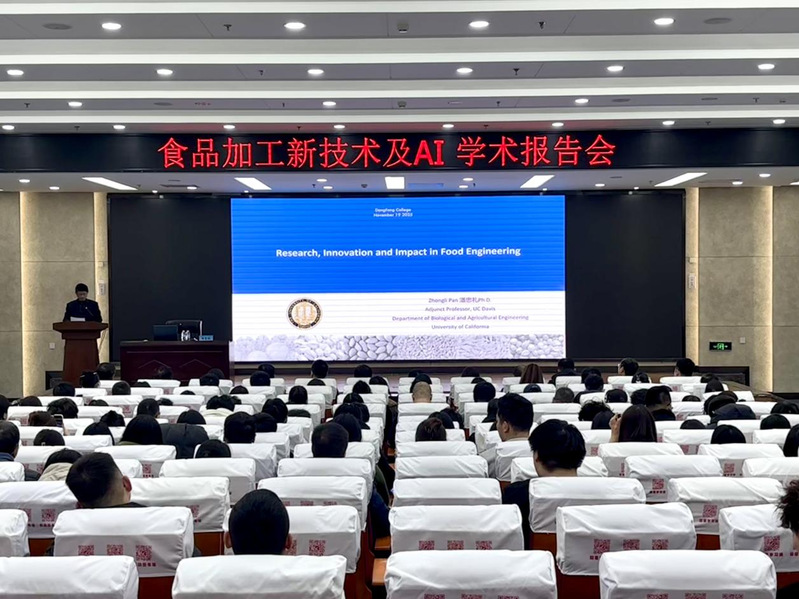
Xu Jiancheng began his remarks by addressing major national strategic tasks such as food security and poverty alleviation. He provided a profound analysis of the importance and urgency for universities to break down traditional disciplinary barriers and promote interdisciplinary collaboration in the era of informatization and artificial intelligence. He pointed out that the "project-based approach" is an effective path to foster interdisciplinary integration. By consolidating resources from different disciplines and forming cross-disciplinary teams around specific projects, true complementary advantages and collaborative innovation can be achieved. He encouraged all faculty and students to prioritize the cultivation of critical thinking in teaching and research, rather than merely focusing on knowledge dissemination. He emphasized that the development of new engineering and new liberal arts disciplines should not be the isolated effort of individual schools or colleges. Instead, it requires deep integration between engineering disciplines, as well as between engineering and liberal arts, to create synergies in education and innovation. He expressed hope that this lecture would serve as an opportunity to further inspirethe entire university's faculty and students to engage in deep reflection and practical exploration of interdisciplinary integration, thereby supporting the university’s steady progress and renewed achievements in the development of new engineering and new liberal arts disciplines.
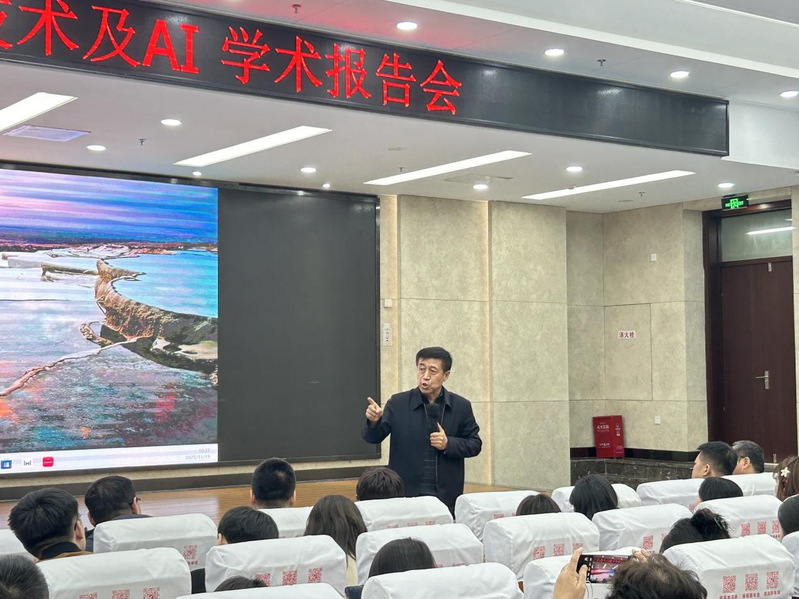
Professor Pan Zhongli delivered a lecture titled "New Technologies and AI in Food Processing: Applications and Prospects." Drawing on his over three decades of cross-disciplinary experience in both academia and industry in the United States, he systematically introduced cutting-edge topics such as infrared heating technology, intelligent monitoring systems, and the application of AI in food engineering. He also shared insights from his team's pioneering explorations at the intersection of AI and food engineering. Looking ahead, he discussed the potential applications of combining AI with drones in areas such as precision pesticide application, disease identification, and temperature regulation, while also responding to students' innovative ideas regarding "drones + high-temperature sterilization."He emphasized that true innovation often emerges at the intersection of disciplines. It is essential to start from practical problems and form interdisciplinary teams rather than remaining confined within one's professional comfort zone. He encouraged faculty and students to "approach scientific research with an artistic mindset," treating every experiment and piece of equipment as a work of art, while maintaining curiosity and a desire to explore the world.
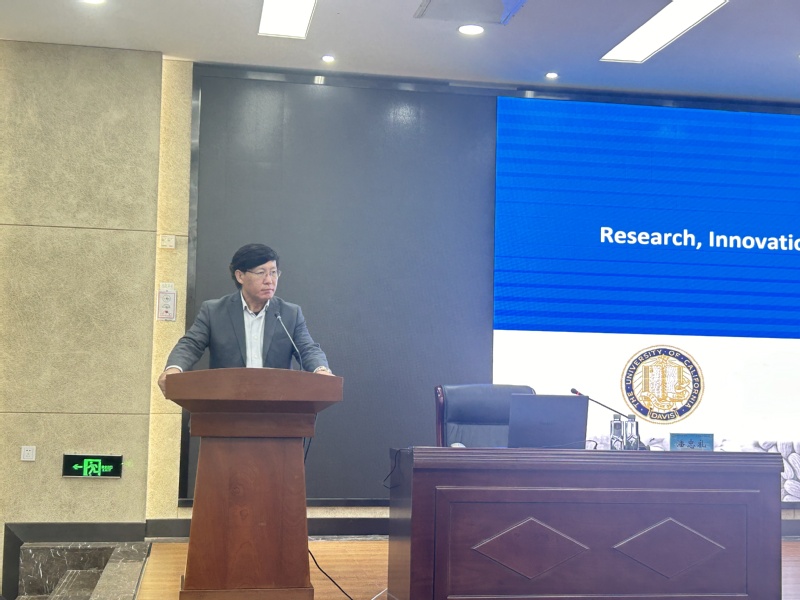
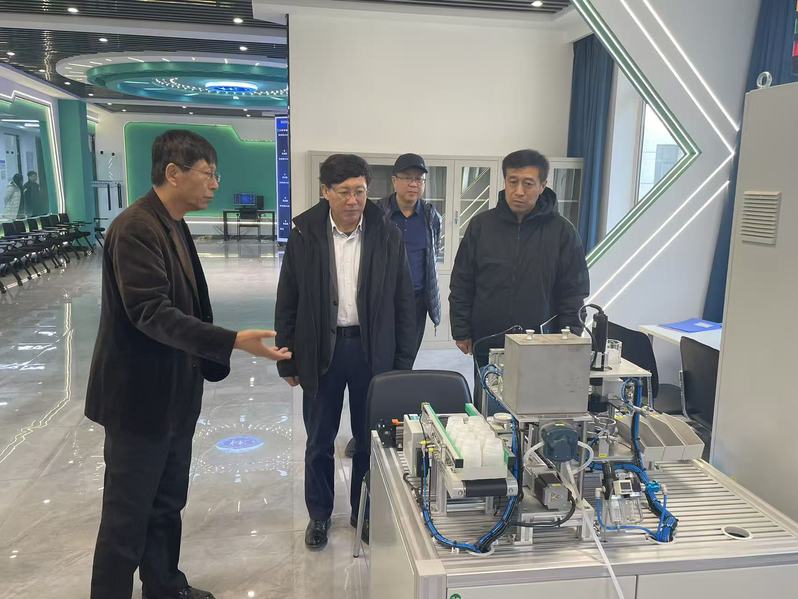
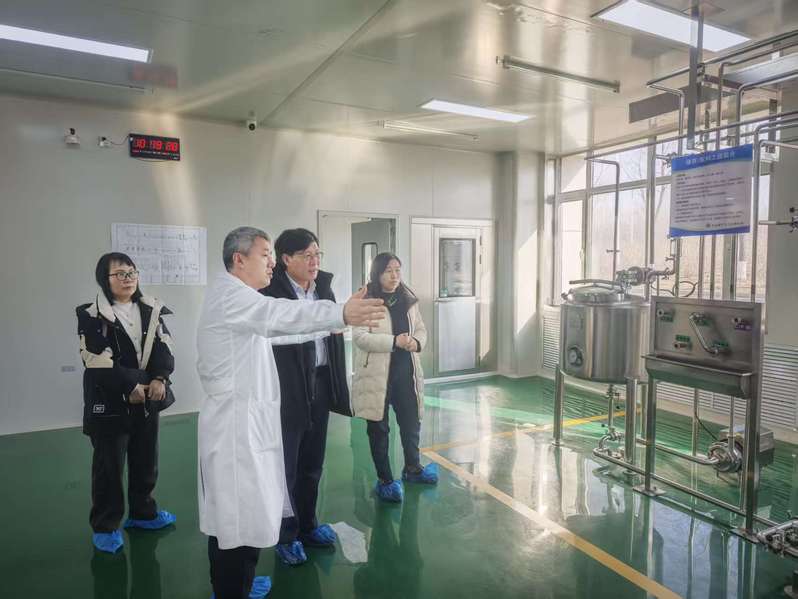
After the meeting, accompanied by Xu Jiancheng, Ye Fei, and the deans of the College of Mechanical and Electrical Engineering and the College of Food Engineering, Professor Pan Zhongli visited the Mechanical Engineering Experimental and Practical Training Center and the Dairy Processing Internship and Practical Training Center at our university. He conducted an on-site inspection of the construction status and research and teaching conditions of the relevant laboratories. During the visit, he engaged in discussions and exchanges with the accompanying personnel on topics such as laboratory development and interdisciplinary practices.